This week, UNE delegates from locals in Manitoba and Saskatchewan are gathering in Winnipeg for the 2026 Regional Seminar. Over three days, participants will explore practical tools, share experiences from their workplaces, and strengthen the connections that support effective representation.
The seminar is designed to help delegates build confidence in their roles, deepen their understanding of key issues, and leave with what they need to move forward:
clearer knowledge of their rights and responsibilities
answers to the questions they bring from their locals
new contacts and support networks across the region
a stronger foundation as they prepare for the 2026 Convention
We’re looking forward to a productive and energizing week together in Winnipeg — and to seeing the ideas, relationships, and momentum that delegates will carry back to their locals.
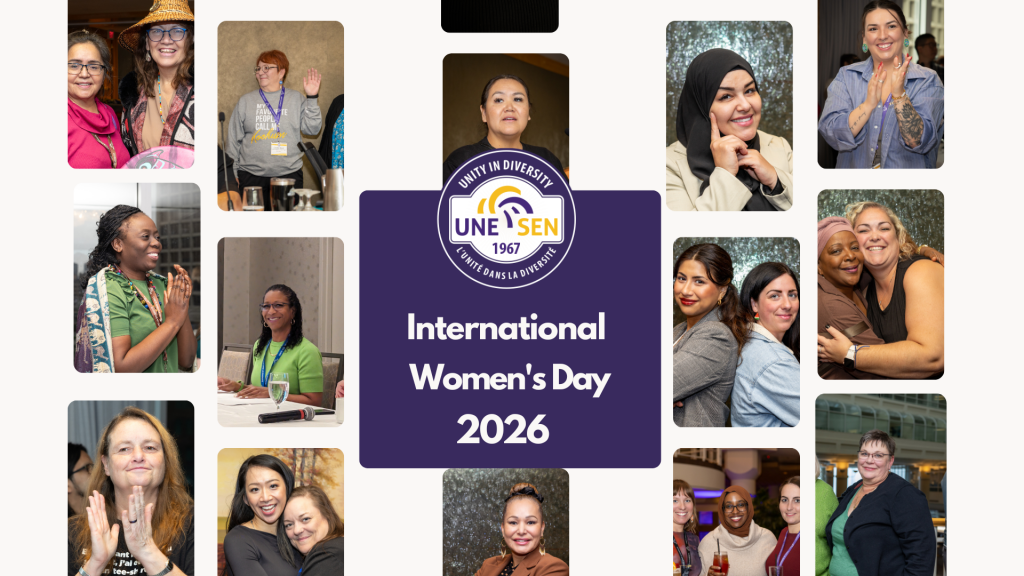
Every year on March 8, UNE joins a global movement that began more than a century ago — rooted in labour activism, collective struggle, and the fight for equality. International Women’s Day has never been only a celebration. It has always been a call to action.
In 2026, that call still matters.
Across UNE, women continue to shape our union through their leadership, their advocacy, and their everyday contributions. We are proud of the women who strengthen our movement — but pride alone isn’t enough. Equity requires action, solidarity, and honest conversations about where we are and where we still need to go.
Women remain an equity‑seeking group in workplaces across Canada, including within our own union structures. Progress is real, but so are the gaps. And while representation has improved, representation alone doesn’t guarantee equity. The work continues — on the shop floor, in leadership spaces, and in the everyday interactions that shape our workplaces and communities.
What Has Changed — and What Hasn’t
Across UNE, we’ve seen meaningful steps forward:
More women stepping into leadership roles
Stronger equity language in collective agreements
Growing awareness of gender‑based barriers
Increased visibility of Indigenous, racialized, 2SLGBTQIA+, and disabled women’s experiences
But we also see the ongoing challenges:
Pay inequity that persists across sectors
Disproportionate caregiving responsibilities
Harassment and discrimination that remain underreported
Barriers to advancement, especially for marginalized women
Workplaces that still default to systems built without women in mind
These realities remind us that equity isn’t a milestone — it’s a practice.
Equity is a union issue. When any group faces systemic barriers, the entire labour movement is weakened. When we remove those barriers, we strengthen our collective power.
At UNE, solidarity means showing up for each other — not only when it’s easy, but when it requires reflection, learning, and change. It means listening to women’s experiences, believing them, and acting on what we hear. It means recognizing that gender equity intersects with race, class, disability, sexuality, and culture.
A Conversation Worth Having
This year, we’re inviting UNE members to reflect with us:
What does progress look like in 2026?
Where are the barriers still showing up?
How do we build a union where every woman — every sibling — can thrive?
These aren’t rhetorical questions. They’re an invitation to shape the future of our movement together.
Moving Forward, Together
International Women’s Day is a reminder that equity doesn’t happen by accident. It happens through collective action, shared responsibility, and the courage to keep pushing for better.
We’re proud of the women in UNE. We’re proud of the progress we’ve made.
The countdown is officially on! In just a few months, UNE delegates from across the country will gather in Montréal for the 2026 UNE Triennial Convention, taking place August 24–28, 2026, at the Fairmont Queen Elizabeth Hotel.
Convention is where members come together, exchange ideas, and help chart the direction of our union for the years ahead. This is your opportunity to bring forward your experiences, your vision, and your voice.
When Convention returns, it brings with it renewed energy, long‑awaited discussions, and the chance to collectively set priorities for the future.
Delegates from locals across the country will debate and vote on resolutions, strengthen our internal democracy, and build solidarity by connecting with fellow members.
Your Local’s Role Starts Now
1. Make Sure Your Local Is in Conformance
To send delegates to Convention, locals must be in conformance by submitting the required financial documents.
2. Electing Delegates and Alternates
Delegates and alternates must be elected at a general Local meeting. The number of delegates your local can send depends on the number of members in good standing. Larger locals may send up to five delegates.
3. Observers — A Great Opportunity to Participate
Locals in conformance may also send observers at the Local’s expense, not at the member’s personal expense. Observers can attend Convention, follow the debates, and be part of the experience, but they do not participate in voting.
Not sure if your local is sending observers? Ask your local representative — you might be pleasantly surprised! Many locals welcome the opportunity to include more members in Convention activities.
Submit Your Resolutions — Your Ideas Matter
Locals are encouraged to form a resolutions committee (often 3–5 members) to review and prepare proposals from the membership. Locals may also create theme‑specific committees, such as for constitution & bylaws or finance. After debate and adoption at a general membership meeting, resolutions can be submitted online through the UNE website and must be accompanied by signed minutes.
Montréal Awaits — Be Part of This Moment
The 2026 Convention will bring together hundreds of UNE members in one of Canada’s most vibrant cities. This is our moment to reconnect, recharge, and re‑ignite our shared purpose.
We’re excited to welcome you to Montréal this summer. Let’s build the next chapter of our union — together and in solidarity.
This Black History Month, PSAC honours the leadership, resilience and organizing power of Black workers who have shaped Canada’s labour movement and continue to lead the fight for justice today. This year, PSAC’s theme is “Black Voices: Bold Futures – From Legacy to Leadership.” This is a call to recognize the legacy of resistance that has shaped our unions and to center the voices that are charting a bold path forward.
Historically, many Black workers have fought for fair workplaces and spoken out against racism and discrimination, including during strikes and other human rights fights, earning an important seat at decision-making tables.
Activists and leaders like Stanley Grizzle and Bromley Armstrong pushed unions and governments to stop racist practices and helped shape what unions bargain for and what they fight for. From the days of railway porters to today, their work helped and continues to achieve a strong base for fair work and anti-racism policies at work.
The United Nations has launched a new International Decade for People of African Descent (2025–2034), focused on supporting Black communities, breaking down systemic barriers and lifting Black voices in Canada and around the world. Canada has pledged to continue this work until 2028 and is also taking part in this second decade.
Black members lead allyship and equity work
Black members are showing what allyship looks like in practice, including at PSAC’s 2025 National Women’s Conference where Black women delegates championed and supported key resolutions to expand domestic violence training, improve access to health care for Indigenous women. Members at the conference unanimously voted in favour of a resolution to formally recognize the contributions of Black women workers.
Together, with other equity groups, Black members are shaping union policy and bargaining priorities in ways that offer a model for the wider labour movement on how to live up to equity commitments through both words and concrete action.
At the same time, these past and current achievements don’t erase what Black workers are still facing in Canada’s public service. Black workers continue to deal with lower pay, less access to training, mentorship and chances to grow in their careers, and they deal with employers who ignore or fail to stop anti-Black racism at work.
We cannot ignore how this year’s federal budget cuts are hurting equity groups, including Black and other racialized workers who are already underrepresented in the federal public service.
Taking action on anti-Black racism
This is precisely why PSAC’s ongoing work to center Black voices in our union is so important. We are building on years of organizing, creating space for members to come together, organize, and speak up about the issues that affect them. PSAC’s Black caucus is member-led groups where Black members share experiences, build leadership, and organize around issues like anti-Black racism at work and within the union.
Our racial justice work also goes beyond our internal union work. We have filed a human rights complaint with the Canadian Human Rights Commission on behalf of all Black federal public service workers, and several other grievances to challenge anti-Black racism. We are pushing employers to fix unfair practices, and are demanding equal access to training, mentoring and career growth for Black workers.
We are calling on the federal government to settle the human rights complaint to make Black federal workers whole, implement the recommendations of the Taskforce on the Employment Equity Act Review including making Black workers a separate employment equity group, and work with unions and equity groups before making any policy changes that put workers and their communities at risk. The future of Canada’s public service depends on equity, inclusion, and the leadership of those who have long been on the front lines of the fight for justice.
From coast to coast to coast, PSAC members make a difference every day — because public services are only as strong as the people behind them.
Mackenzie Hulzebosch helps keep Canada safe
As a parole officer in Hamilton, Mackenzie Hulzebosch has a lot on her plate when she gets up and goes to work. Mackenzie visits offenders at their houses, jobsites, and her office to help them safely reintegrate back into public life.
“We are the frontline workers,” Hulzebosch said.We’re the people keeping you safe. Making sure that the public service is supported ensures that we can continue to help Canada in the best and most efficient way.”Hulzebosch says parole officers work with high-risk offenders balancing a heavy, complex caseload. She says her top concerns at work are staffing levels and training.
But she feels a sense of pride whenever she helps her clients transition to the next stage of their life after parole.
“When they leave with a job, with a house, with better connections to their family and being a positive member of society, I am so proud of that because I see the work that they put into it,” said Hulzebosch.
Helping unemployed Canadians get the benefits they deserve
For Charito Humphreys, it’s crucial to support unemployed workers in Canada. Humphreys helps provide them with insurance benefits, through her work at an employment insurance call center.
“Most people will use employment insurance at one point or another,” said Humphreys. “These are services that Canadians rely on in almost any aspect of their life.”
Humphreys’ call center, based in Regina, Saskatchewan, offers insurance benefits for illness, maternity, compassionate care and more. Though she does not directly provide this support, she educates the officers that will, as a business expertise advisor.
“For me, the best part about my job is when I have officers who come back to me and say: ‘thank you for all that you’ve done to support me in my job,’” said Humphreys. “What you’ve taught me has helped me become a better officer. It’s helped me provide a better level of service. To me, that means I’ve done my job well in supporting these officers in being the best that they can be in order to serve Canadians.”
An ally advocating for First Nations teachers
Caila Pischke loves her job as a schoolteacher. The school where she teaches hosts 110 students, all of which are members of the Denesuline First Nations.
“We are one of the only western schools in Canada that is on a federal reserve,” said Pischke. “I work at Cold Lake First Nations, in Alberta.”
Though Pischke herself does not identify as a member of the First Nations, much of the teaching at her school is done in the Denesuline language. However, Pischke and her fellow teachers had not been receiving an indigenous language allowance. As president of her local teachers’ union, Pischke helped bargain for it.
“We ended up getting the indigenous languages allowance for the teachers at our school,” said Pischke.
“It was really important to be able to recognize the indigenous languages and be able to see them as national languages in Canada, and not just English and French.”
Peter Butler safeguards Canada’s waterways
As a fishery officer that calls the winding rivers of central Newfoundland home, Peter Butler is proud to protect Canada’s waterways. Butler patrols and regulates surrounding fisheries and educates local communities on how they can conserve Canada’s aquatic resources.
“I work to safeguard and protect Canada’s freshwater and marine ecosystems,” said Butler.
“Our waters are very vital to our local economy; they’re a source of income for a lot of people living here and important to the well-being of folks living in the community and beyond.”
This work is an important driver of the economy in the province: the marine sector accounted for approximately 33 per cent of Newfoundland and Labrador’s GDP in 2022. He also helps support other agencies with search and rescue operations and other emergencies such as wildfires and floods.
Butler wants to ensure that the important work he does in the public service is protected.
“We’re there to serve Canadians,” said Butler. “Our job is to keep these waters protected for the environment and our children and for the generations to come.”
Every December 10, Human Rights Day commemorates the adoption of the Universal Declaration of Human Rights (UDHR).
In 2025, the United Nations highlights the theme “Human Rights: Our Everyday Essentials.” This theme highlights a simple truth: human rights are not theoretical. They are what make it possible to live and work with dignity, safety, and fairness — every day.
For the labour movement, human rights take very concrete forms: • the right to work in a safe environment, free from harassment and violence; • the right to employment equity, particularly for persons with disabilities, women, racialized workers, and members of marginalized groups; • the right to decent work, fair wages, and working conditions that respect human dignity.
For UNE, defending human rights means defending workers in their day-to-day reality — in workplaces, staffing processes, and access to real opportunities.
Human rights are also fundamental freedoms: • the freedom to go for a run without fear for your safety; • the opportunity for a person with a disability to access employment without systemic barriers or discrimination; • the right for every individual to be recognized, respected, and protected, regardless of identity or circumstance.
These realities extend beyond the private sphere. They are reflected in employment policies, management practices, workplace accessibility, and organizational culture.
When rights are weakened, workers are often the first affected through discrimination, exclusion, and insecurity. When rights are protected, workplaces become fairer, more inclusive, and more humane.
Governments have the legal responsibility to respect human rights, but their practical application also depends on collective vigilance. Unions play a central role in ensuring that these rights are not merely theoretical, but real and enforceable in working life.
On Human Rights Day, UNE reaffirms that human rights are inseparable from workers’ rights. They form the foundation of decent, safe, and equitable work — now and in the future.
Whether you’ve already received an affected notice, are supporting a friend or coworker, or just want to be ready for what’s coming, you don’t have to navigate job cuts alone. Workforce adjustment — known as employment transition for CFIA workers — can be confusing, with multiples paths and choices to consider. PSAC is here to guide you through every step of the way.
Our new video walks you through the process, explaining your options and the support available to you. Whether you want to stay in the public service or explore new opportunities, we highlight the paths available and protections in place to help you make informed decisions about your next steps.
Watch the video now and take the first step in navigating this process with the information you need.
You can also visit our resources page for more information, including a members’ guide, frequently asked questions, alternation platform, and more.
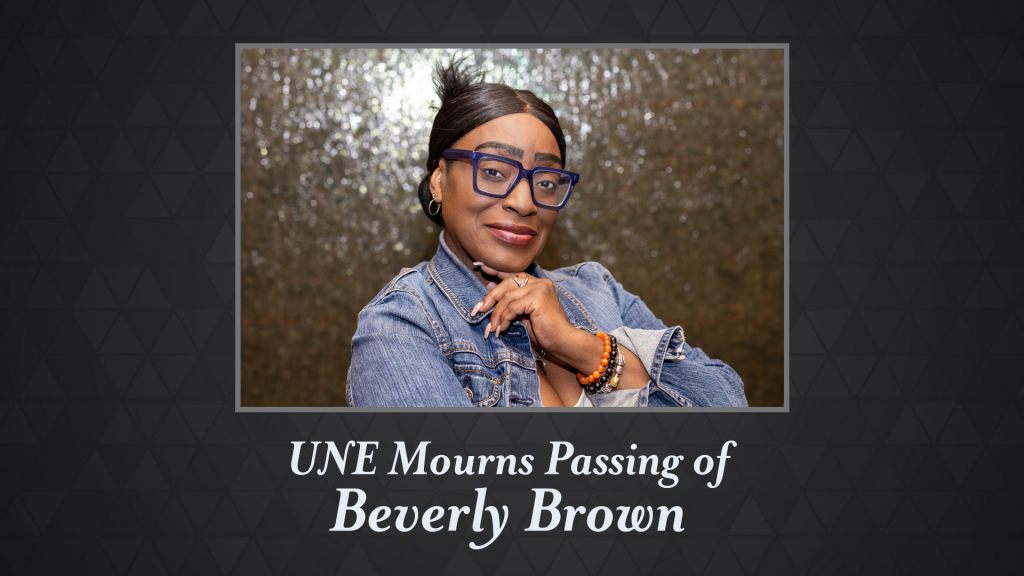
The Union of National Employees is deeply saddened to share the passing of our powerful and beloved sister, Beverly Denaise Brown. Her absence has been felt profoundly across the UNE and PSAC families.
Bev was a tireless leader who dedicated herself wholeheartedly to advocating for workers. She was a long-serving and influential voice within the PSAC-NCR Racialized Members Action Committee and held several positions within the PSAC-NCR Council. Within UNE, she served with distinction as President of Local 70181, Assistant Regional Vice-President from 2017 to 2022, and Regional Vice-President in 2025. She was also a key leader during the 2023 PSAC strike, where her commitment, strength, and clarity of purpose inspired many.
Bev loved being part of her union. She believed deeply in union principles and championed equity long before it became common practice, helping to advance Treasury Board’s Embracing Change equity initiatives more than 25 years ago. Her passion for justice extended far beyond the labour movement. Bev was a dedicated volunteer in her community and gave her time generously to events like Bluesfest and Jazzfest—always offering her energy, kindness, and unwavering sense of service.
She will be dearly missed and mourned by many. We are forever grateful for her leadership, her contributions, and the lasting impact she made on our union and the broader community.
Our hearts are with all who knew and loved her.
You can find Beverly’s obituary and digital guestbook here:
The Union of National Employees (UNE) was placed under trusteeship by the Public Service Alliance of Canada (PSAC) National Board of Directors on October 24, 2025 in accordance with the PSAC Constitution and Regulations.
The Board has appointed PSAC National Executive Vice-President, Alex Silas as Trustee, and Dominic Lavoie as Administrator to manage UNE’s day-to-day operations. Together, they are assessing the current situation and will determine the appropriate steps to move forward.
Impact on UNE Members
Support and service to members will be a high priority, and UNE staff and Local officers are available to provide assistance and representation.
During the trusteeship period, no national and regional elected component officers may hold office or may represent themselves as UNE officers. Local leadership remains in place and continues its work on behalf of the membership.
Regional Deputy Trustees have been appointed by the Trustee to support the Trustee and Administrator in rebuilding the Component and ensuring continuity of service and accountability to UNE members. Deputy Trustees are not a replacement for the UNE National Executive, nor are they a decision-making body.
Deputy Trustees are responsible for supporting Locals in their ongoing work, including participation in LMCCs, conducting general meetings, and managing grievances and staffing complaints.
On an as-needed basis, assistant deputy trustees may also be appointed to assist the work of the deputy trustee.
The roles and responsibilities of UNE Locals and Local officers remain unchanged. Members should continue to contact their Local as the first point of contact.
Questions regarding component business should be directed to UNE staff or the Deputy Trustees.
Questions related to the trusteeship should be directed to Alex Silas, Trustee.